

Reduce Payroll Pressure: How Offshore Accounting Saves Firms 40–60%
Introduction
Rising payroll costs have become one of the biggest challenges for accounting firms across the globe. With increasing salary expectations, benefits, and operational expenses, maintaining profitability is getting harder. Firms are now exploring smarter solutions to manage these pressures without compromising service quality, and offshore accounting has emerged as a practical approach.
Why Payroll Costs Are Rising
The demand for skilled accountants continues to grow, especially in developed markets. This demand has led to higher wages, increased competition for talent, and additional expenses such as training, compliance, and employee retention. For small and mid-sized firms, these costs can significantly impact margins and limit growth potential.
How Offshore Accounting Helps
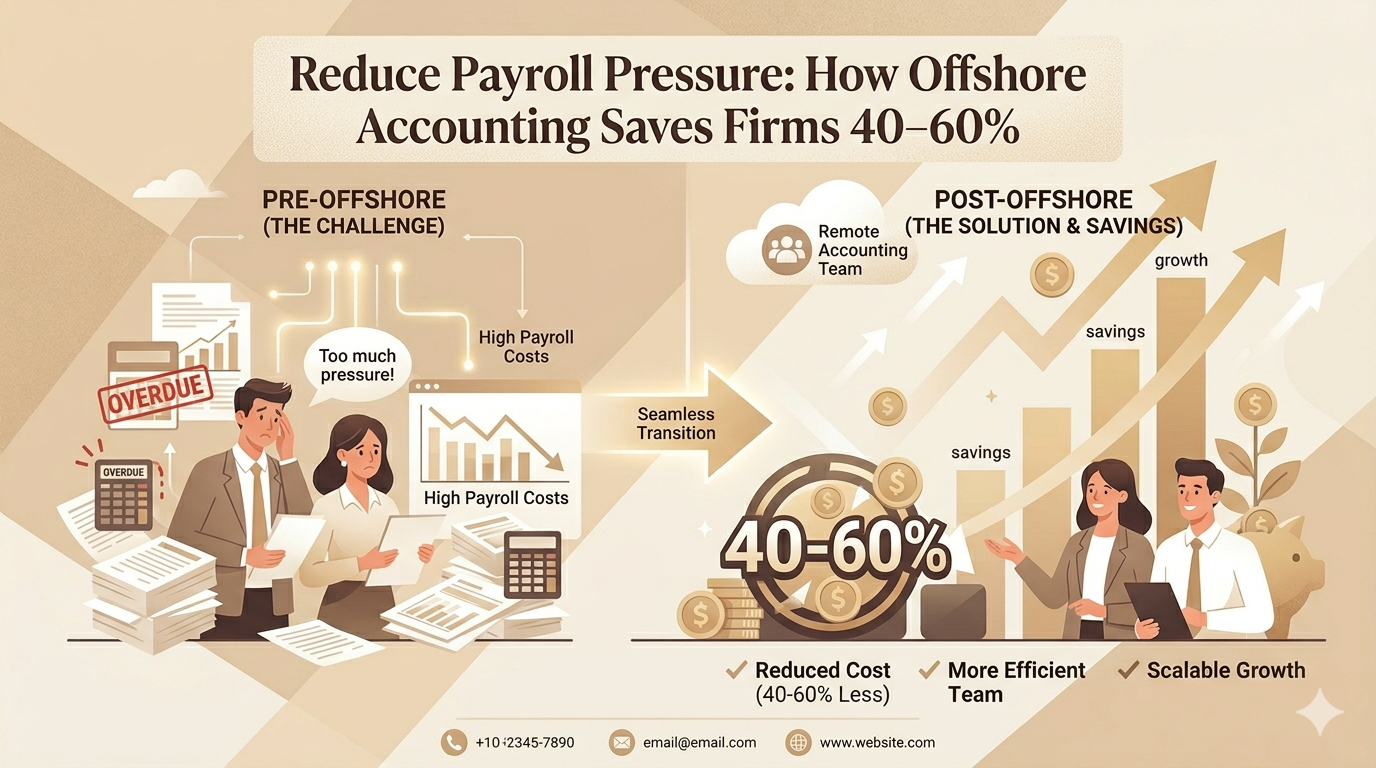
Offshore accounting enables firms to delegate routine and time-consuming tasks to skilled professionals in cost-effective regions. By doing so, firms can reduce payroll expenses by 40–60%. These savings come not only from lower salaries but also from reduced infrastructure, recruitment, and administrative costs.
Technology Enables Seamless Collaboration
Modern cloud accounting tools and secure communication platforms have made offshore collaboration easier than ever. Firms can monitor work in real time, share data securely, and maintain full control over processes without geographical limitations.
Flexibility During Seasonal Workloads
Accounting firms often face seasonal spikes, especially during tax periods. Offshore teams allow firms to scale up quickly during peak times and reduce capacity when demand slows, avoiding unnecessary payroll burden.
Long-Term Financial Stability
Reducing payroll pressure is not just about immediate savings. Offshore accounting helps firms create a more sustainable cost structure, allowing them to reinvest in growth, technology, and client acquisition.
Conclusion
Offshore accounting is a strategic way to reduce payroll pressure while maintaining efficiency. Firms that adopt this model can improve profitability and focus more on growth-oriented activities.