

How Accounting Firms Can Scale Without Hiring More Staff
Growth is a positive indicator for any accounting firm. When a firm attracts new clients and expands its service offerings, it creates opportunities for increased revenue and stronger market presence.
However, growth also introduces operational challenges.
One of the most common challenges accounting firms face during expansion is maintaining delivery capacity. As the number of clients increases, the workload associated with bookkeeping, financial reporting, and compliance tasks grows as well.
Traditionally, firms have addressed this issue by hiring additional employees. While recruitment remains an important part of firm development, relying solely on hiring may not always provide the flexibility required to manage growth efficiently.
Many accounting firms are now exploring operational strategies that allow them to scale their services without significantly expanding their internal workforce.
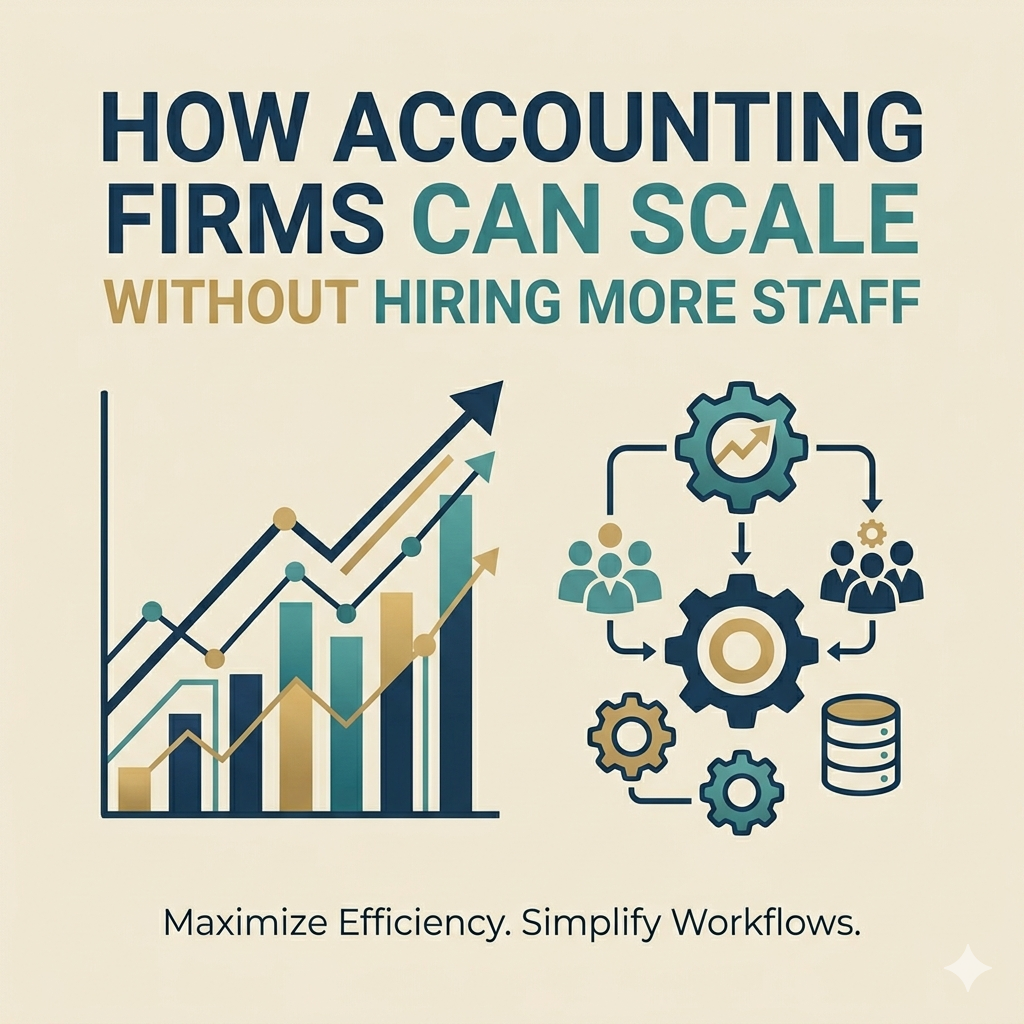
**1. Improving Workflow Processes**
The first step toward scalable operations is improving internal workflow systems.
Accounting tasks often follow structured processes such as data entry, reconciliation, financial review, and reporting.
By creating standardized workflows, firms can complete these tasks more efficiently and reduce the likelihood of delays or errors.
Clear processes also make it easier for teams to collaborate and maintain consistent service quality.
**2. Using Technology for Automation**
Technology has become an essential part of modern accounting operations.
Automation tools can assist with tasks such as transaction categorization, invoice processing, and reconciliation.
These tools reduce the amount of manual work required from accounting professionals and allow teams to focus on higher-level financial analysis.
Firms that integrate technology into their workflows can significantly improve productivity.
**3. Delegating Routine Tasks**
Another strategy for scalable operations involves delegating routine tasks to specialized support teams.
Activities such as bookkeeping, document preparation, and data organization can often be managed by dedicated execution teams.
This allows senior accountants and partners to focus on review processes, financial strategy, and client communication.
Delegating operational work creates a more balanced workload distribution within the firm.
**4. Focusing on High-Value Services**
As accounting firms grow, many partners aim to expand their advisory services.
Advisory work includes financial planning, strategic consulting, and business performance analysis.
These services typically provide greater value to clients and strengthen long-term relationships.
When routine execution tasks are managed efficiently, partners have more time to develop these higher-value services.
**5. Building Flexible Operational Models**
Scalable accounting firms often adopt flexible operational structures that allow them to adjust resources based on workload demand.
Instead of maintaining a fixed team size for every operational requirement, firms develop systems that allow them to increase execution capacity when needed.
This flexibility helps firms respond quickly to growth opportunities while maintaining operational efficiency.
**Key Points Summary**
- Growth increases operational workloads for accounting firms.
- Standardized workflows improve efficiency and reduce errors.
- Automation technology reduces manual accounting tasks.
- Delegating routine work allows professionals to focus on strategic services.
- Flexible operational models support scalable firm growth.
**Conclusion**
Scaling an accounting firm requires more than simply increasing the number of employees.
Successful firms focus on building efficient processes, integrating technology, and developing flexible operational structures.
By managing routine execution work effectively, accounting firms can expand their services while ensuring that partners and senior professionals focus on strategic growth opportunities.
This balanced approach helps firms maintain productivity, improve client service, and build a sustainable foundation for long-term success.