

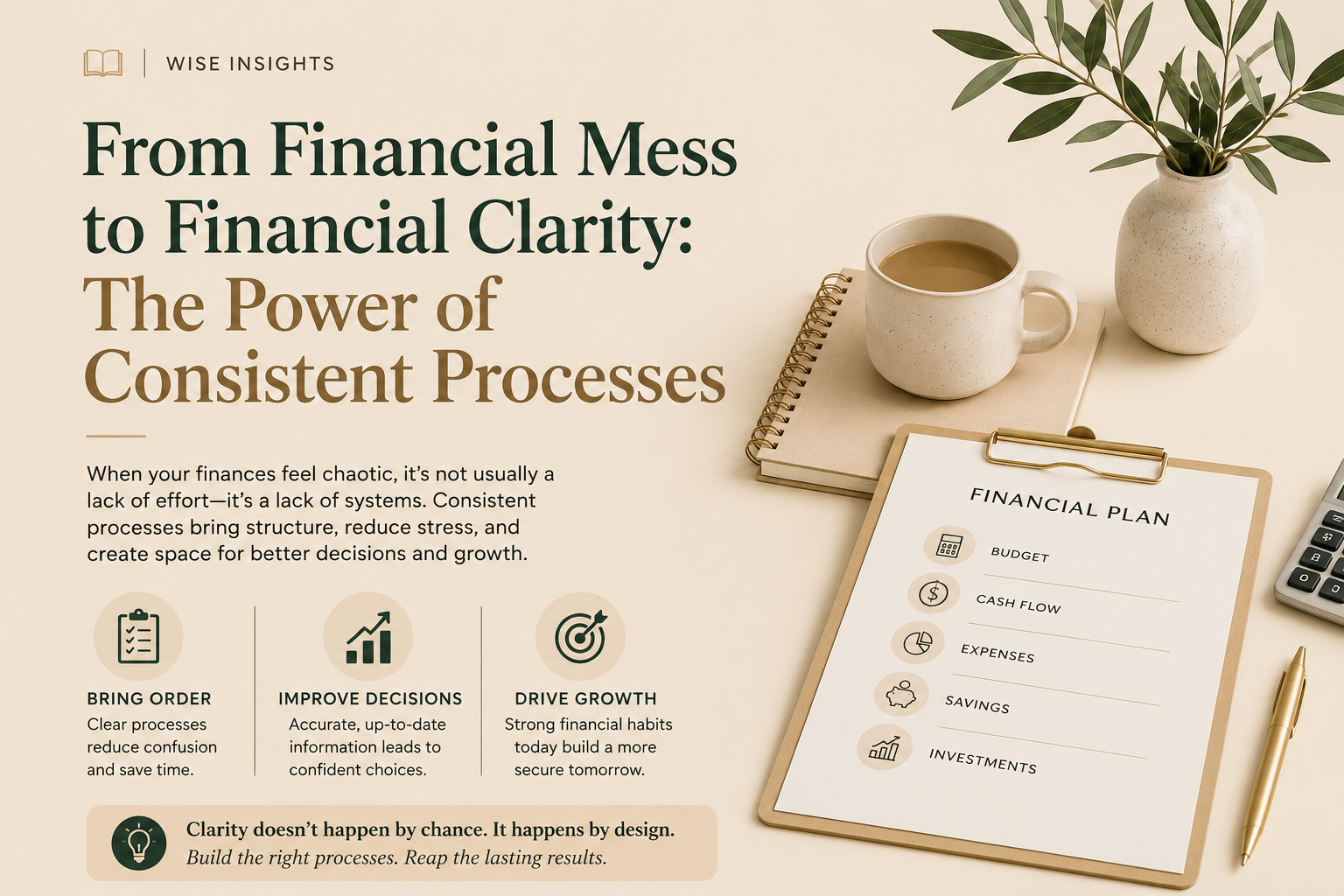
From Financial Mess to Financial Clarity: The Power of Consistent Processes
Every business starts with ambition, goals, and a vision for growth. But as operations expand and transactions increase, many businesses find themselves facing a common challenge: financial disorganization.
Receipts pile up, invoices get untracked, accounts remain unreconciled, and financial reports become less reliable. What begins with a few minor oversights can quickly turn into a financial mess that affects decision-making, cash flow, and overall business performance.
The good news? Financial clarity is achievable, and it starts with consistent processes.
What Financial Chaos Looks Like
Financial disorders don't always appear dramatic. In fact, it often develops gradually through inconsistent habits and undocumented procedures.
Common signs include:
- Delayed bookkeeping entries
- Missing financial documents
- Unreconciled bank and credit card accounts
- Outstanding invoices that are overlooked
- Inaccurate financial reports
- Uncertainty about cash flow and profitability
- Last-minute tax preparation stress
When financial information is incomplete or outdated, business owners lose the visibility they need to manage and grow their companies effectively.
The Root Cause: Lack of Consistent Processes
Many businesses don't struggle because they lack accounting software or skilled professionals. They struggle because they lack consistent systems.
Without defined processes, tasks are completed differently each time or not completed at all.
For example:
- Transactions may be recorded irregularly.
- Expenses may be categorized inconsistently.
- Reconciliations may be delayed for months.
- Financial reviews may happen only when problems arise.
Over time, these inconsistencies create confusion, errors, and inefficiencies throughout the financial operation.
Why Consistency Creates Clarity
Consistent financial processes provide structure, accountability, and accuracy.
Rather than relying on memory or urgency, businesses follow established routines that ensure financial information remains current and reliable.
1. Improved Accuracy
When bookkeeping tasks follow a consistent process, there is less room for errors, omissions, and duplicate entries.
Accurate records lead to accurate financial reports.
2. Better Cash Flow Visibility
Consistent tracking of receivables, payables, and bank transactions provides a real-time understanding of cash flow.
Business owners can anticipate financial obligations and make informed spending decisions.
3. Faster Problem Detection
Regular reviews and reconciliations help identify discrepancies before they become major issues.
Small problems are easier and less costly to fix when caught early.
4. More Confident Decision-Making
Reliable financial data allows leaders to evaluate performance, identify trends, and make strategic decisions with confidence.
When the numbers are accurate, planning becomes easier.
5. Reduced Stress During Tax Season
Businesses with organized financial processes spend less time gathering information and correcting errors when tax deadlines arrive.
Everything is already documented, categorized, and ready for review.
Building Consistent Financial Processes
Creating financial clarity doesn't require complex systems. It requires commitment to routine and accountability.
Key practices include the following:
Record Transactions Regularly
Avoid allowing transactions to accumulate. Frequent recording keeps books current and manageable.
Reconcile Accounts Monthly
Bank and credit card reconciliations help verify accuracy and identify discrepancies quickly.
Standardize Financial Workflows
Create clear procedures for invoicing, expense management, approvals, and reporting.
Review Financial Reports Consistently
Monthly reviews help business owners understand performance and address concerns proactively.
Assign Clear Responsibility
Every financial process should have an owner responsible for ensuring tasks are completed accurately and on time.
The Long-Term Impact of Financial Clarity
Businesses that implement consistent financial processes gain more than organized books.
They gain:
- Greater visibility into business performance
- Improved cash flow management
- Stronger compliance and audit readiness
- Better forecasting capabilities
- Increased confidence in strategic planning
- More time to focus on growth opportunities
Financial clarity becomes a competitive advantage.
The Bottom Line
Financial chaos rarely results from one major mistake. More often, it stems from inconsistent processes repeated over time.
The path from financial mess to financial clarity isn't built through occasional cleanups or last-minute fixes. It's built through consistent, repeatable processes that keep financial information accurate, organized, and accessible.
At Wise Bridge Global, we help businesses and accounting firms establish reliable bookkeeping processes through dedicated offshore accounting support. By creating consistency in financial operations, we help organizations gain the clarity they need to make smarter decisions and achieve sustainable growth.